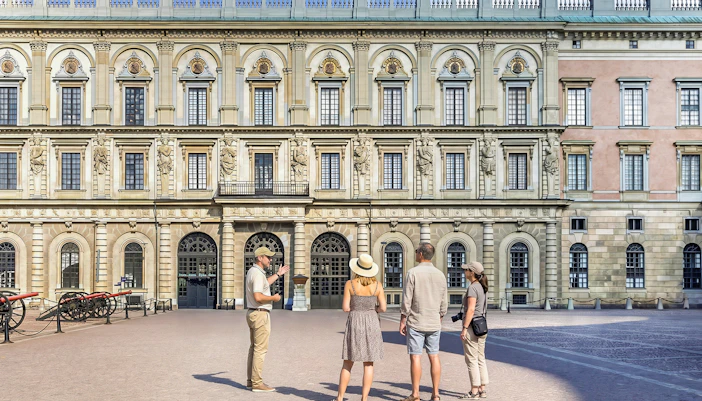
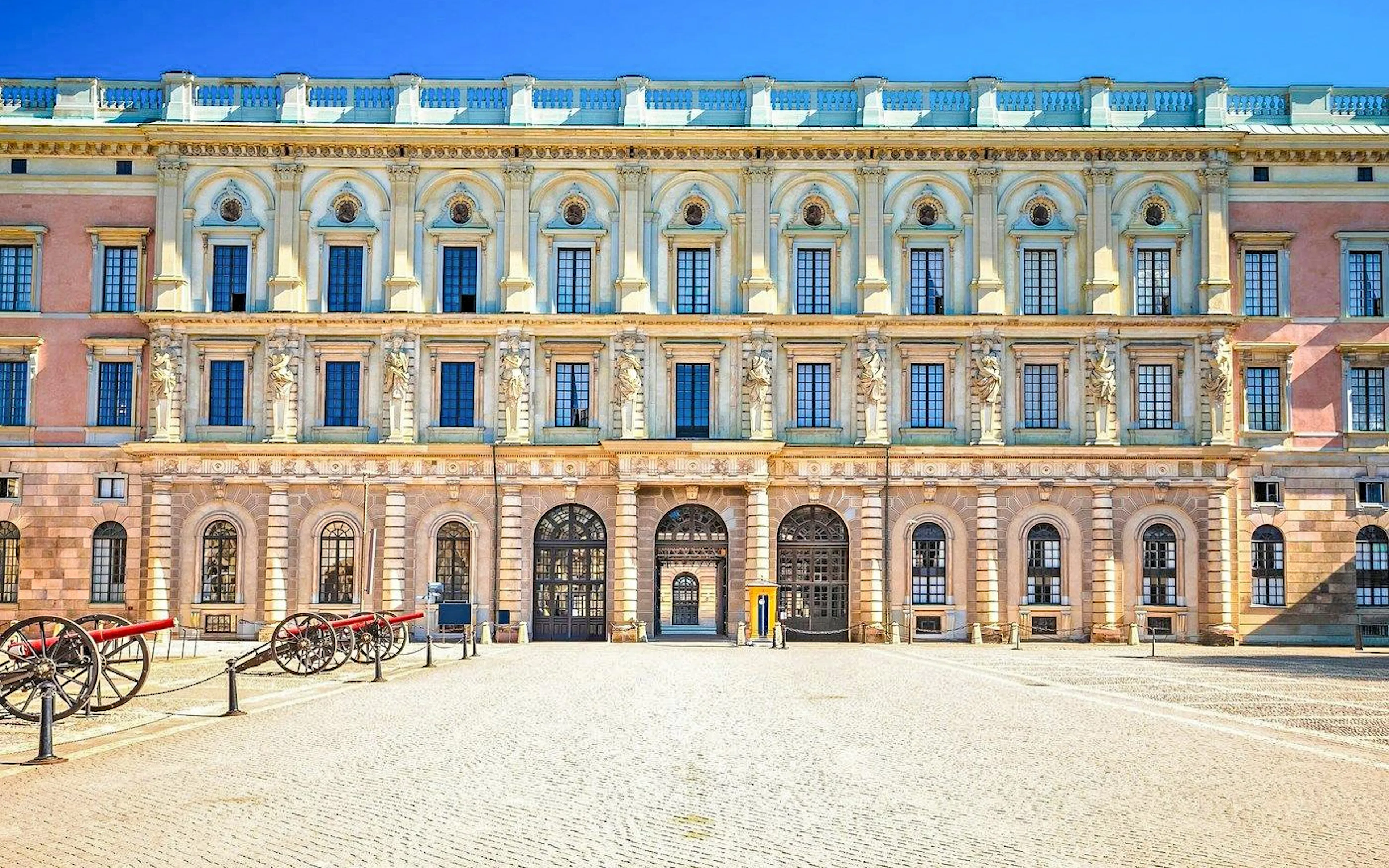
Baroque on the outside, but calmer and more restrained than Versailles, giving the palace a formal, almost governmental weight from the moment you cross the courtyard.
Did you know?
The palace contains over 600 rooms, but only a fraction are open to visitors.
The current palace stands on the site of Tre Kronor, the medieval castle destroyed by fire in 1697, and parts of those older fortifications can still be seen in Museum Tre Kronor.
Gustav III’s Museum of Antiquities opened in 1794 and is considered one of the oldest museums in Sweden and among the earliest public art museums in Europe.
Is the Stockholm Royal Palace worth visiting?
Step through the courtyard and the mood shifts fast: boot heels echo on stone, chandeliers glow beyond heavy doorways, and the palace feels more ceremonial than theatrical. Even on a busy day, there’s a hush inside the staircases and reception rooms that makes you slow down.
This palace rose from the ashes of the old Tre Kronor castle after the 1697 fire and was built to project continuity, order, and royal authority at the heart of Stockholm. That purpose still shapes the visit; you’re not in a preserved fantasy, but inside a building that still serves the Swedish state.
What stays with most visitors is the contrast between restraint and symbolism — silver thrones, crown jewels, and formal rooms that reveal how monarchy is staged in Sweden.
What to see inside Stockholm Royal Palace?
1/6
The outer courtyard
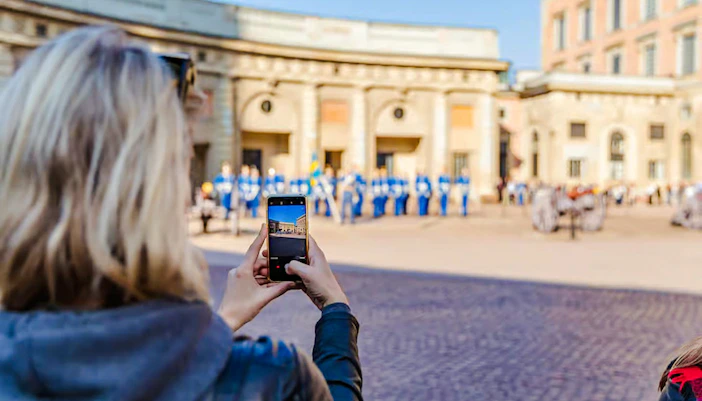
This is your first sense of the palace’s scale, with guards, stone facades, and the ceremonial rhythm of the complex. If you want to watch the Changing of the Guard, arrive early; the courtyard fills quickly around midday.
The State Apartments
These ceremonial rooms are the core of most visits, with chandeliers, portraits, and formal reception spaces that show how the monarchy presents itself. Go early in the day for a quieter first pass through the route.
The Hall of State
Home to Queen Kristina’s silver throne, this is the room where the palace’s symbolism lands most clearly. It is often the interior space visitors remember best because the setting feels unmistakably royal.
The Royal Chapel
The palace chapel adds a softer, more intimate note to the visit, with a ceremonial interior designed for court worship. It is easy to rush past, but it changes the mood of the route.
The Treasury
The crowns, regalia, and ceremonial objects here give needed weight to the formal rooms upstairs. This section is usually brief, but it adds a concrete sense of monarchy that paintings alone cannot provide.
The Museum of Three Crowns
Down in the palace’s lower levels, this museum explains the medieval castle destroyed in the 1697 fire. It is the best place to understand what stood here before, and why the current palace looks the way it does.
How to explore the Stockholm Royal Palace
- Time needed: Give yourself 1.5–2.5 hours inside Stockholm Royal Palace, or about 90 minutes if you’re focusing on the State Apartments, Hall of State, Treasury, and Museum of Three Crowns without lingering. The longer end is realistic if you want the audio guide, the Royal Chapel, and time in the courtyard for the guard ceremony.
- Suggested route: Start at opening if you can. Enter through the main courtyard, move first to the State Apartments before mid-morning groups thicken, then continue to the Hall of State and Royal Chapel while you’re already on the ceremonial route. Save the Treasury for after the apartments, then finish in the Museum of Three Crowns downstairs; its medieval backstory lands better once you’ve seen the Baroque palace above.
- Must-see: Hall of State, Treasury, Museum of Three Crowns.
- Optional: The courtyard during the Changing of the Guard adds atmosphere, but it can cost 20–30 minutes in standing time and crowds. Many visitors choose tickets that let them combine the ceremony with a visit to the palace interiors.
- Guided vs. self-paced: A guided tour of the palace adds real value here because the rooms are formal and lightly interpreted; without context, it’s easy to miss the political meaning behind what looks like simple decoration.
Brief history of the Stockholm Royal Palace
- 13th century: The medieval fortress Tre Kronor rises on this strategic waterfront site and becomes the nucleus of royal Stockholm.
- 1697: A catastrophic fire destroys most of Tre Kronor, forcing the court to rebuild on a far grander scale.
- 1697–1754: Architect Nicodemus Tessin the Younger designs the present Baroque palace, inspired by Roman palazzi and French royal planning.
- 1754: King Adolf Frederick and Queen Lovisa Ulrika move into the still-unfinished palace, establishing it as the monarchy’s official city residence.
- 19th century: Interiors are updated as tastes change, but the palace keeps its ceremonial role at the center of state life.
- Today: Stockholm Royal Palace remains a working royal building, a museum complex, and the setting for court ceremonies and official receptions.
Who built it?
After the 1697 fire, Nicodemus Tessin the Younger designed the new palace as a sober Baroque statement of stability, drawing on Rome and French court architecture. The project continued across several reigns, but Tessin’s ambition was clear from the start: rebuild royal authority in stone at Stockholm’s political center.
Architecture of the Stockholm Royal Palace
Style
Materials
Sandstone, brick, and plastered masonry create the palace’s pale facades, while marble, gilded details, and painted ceilings carry the drama indoors.
Structure
The square plan wraps around a vast inner courtyard, a practical design that organizes ceremonial rooms, royal functions, and circulation with unusual clarity.
On the ground
Grand staircases, long enfilades, and high windows make you feel the building’s scale, but the rooms still read as working state spaces, not pure showpieces.
Architect
Nicodemus Tessin the Younger gave Stockholm a palace shaped by Continental Baroque ideas, but adapted them to Swedish restraint and court ritual.
A palace that still serves the state
Stockholm Royal Palace is easier to understand once you realize it is not a frozen historic house. It remains the monarch’s official residence and the setting for state receptions, royal audiences, and ceremonial duties, even though the royal family lives mainly at Drottningholm. That working role explains the building’s atmosphere: some rooms feel formal rather than intimate, guards are part of the daily rhythm, and occasional closures are built into palace life. You are visiting a museum, but also a functioning piece of Swedish public life.
Frequently asked questions about the Stockholm Royal Palace
Yes, especially if you want royal interiors and political history rather than pure spectacle. The Treasury and Museum of Three Crowns give the visit depth. Booking a guided ticket option helps the formal rooms make more sense.
Most visitors need 1.5–2.5 hours. Stay closer to 90 minutes if you’re skipping the guard ceremony and audio guide; budget longer if you want the chapel, courtyard, and time in the basement museum. Visits during the first opening hours are often less crowded, while peak periods can slow movement
Do not skip the Hall of State, the Treasury, and the Museum of Three Crowns. If your timing works, add the courtyard during the Changing of the Guard for a sense of the palace as a living institution.
Yes, you can plan a visit for first-timers and families with older children. Kids who like crowns, armor, or ceremony usually engage well, but while planning your visit, factor in that strollers cannot be taken inside and younger children may tire quickly in the formal rooms.
Weekday mornings are best. Arrive at opening for quieter rooms, or visit after 2pm once some tour groups thin out. If you’re planning your route and arrival, avoid getting there right at the guard ceremony if your priority is entering quickly.
No, not always, because lines are usually short. Book ahead if you want a specific guided tour time or combo experience, especially in summer.